Why do we feel the need to chase passion?
I see it more and more often with life coaches and consultants telling you if your work doesn’t light a fire under you, then you should jump to somewhere warmer. Sure. You could. But why does it have to exist elsewhere, in some field on the other side where the grass is pretty dang green? (Unless you’re on that side, then it doesn’t look as green as you remember.)
We need to be engaged in our work. And our employers want us to be engaged. Engaged people outperform their peers by 147%. (Gallup, 2018) But why can’t we make our own engagement?
I get the draw of going rogue and starting something that is your own, like a food truck. That siren song has called to me too. (mine would be called Let’s Taco ‘Bout It) And it’s tempting because we hear about people who’ve successfully made the jump. We don’t hear about (or listen to) all the ones who jump and don’t make it.
However, it’s not the food truck that is really calling me… it’s the creative control and ability to own some decisions. There’s a root cause, a core mechanic, that makes it attractive.
As a good, ten-minute thought experiment, sit down with a passion you feel calling you; telling you to jump. Ask yourself the five whys, and answer with candor, to get to the core mechanic of that passion. Then plan small action steps to make that passion where you are. It may have to start tiny with side projects or little bits and pieces here and there, but this is an opportunity to make where you are better. This is where innovation comes from! Plus you get to take control and ownership of your experience instead of relying on other people to engage you.
You love boardgames. You are inspired by writing poetry. Your heart is full when you are baking. Whatever it is, there are elements you can bring to any job. You just have to take ownership of being the one who brings it.
Stop hunting for passion in the green grass on the other side, and start planting it where you are.
 am a sucker for a well-crafted motivational phrase. That’s actually how “Go Forth And Be Awesome” got started. But not all motivational phrases are created equal. Some go too far for the cute analogy and miss the point altogether.
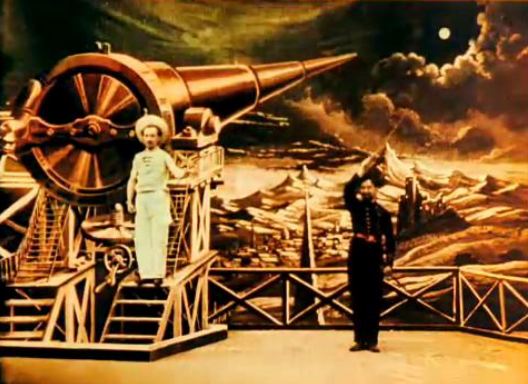 the moon but you’re still in space. Not what you were aiming for, but it is kind of neat. Who says you only get to aim once, though? This isn’t basketball, it’s rocket science! NASA doesn’t aim just once and neither should you. Shoot, check, adjust. Translating that to
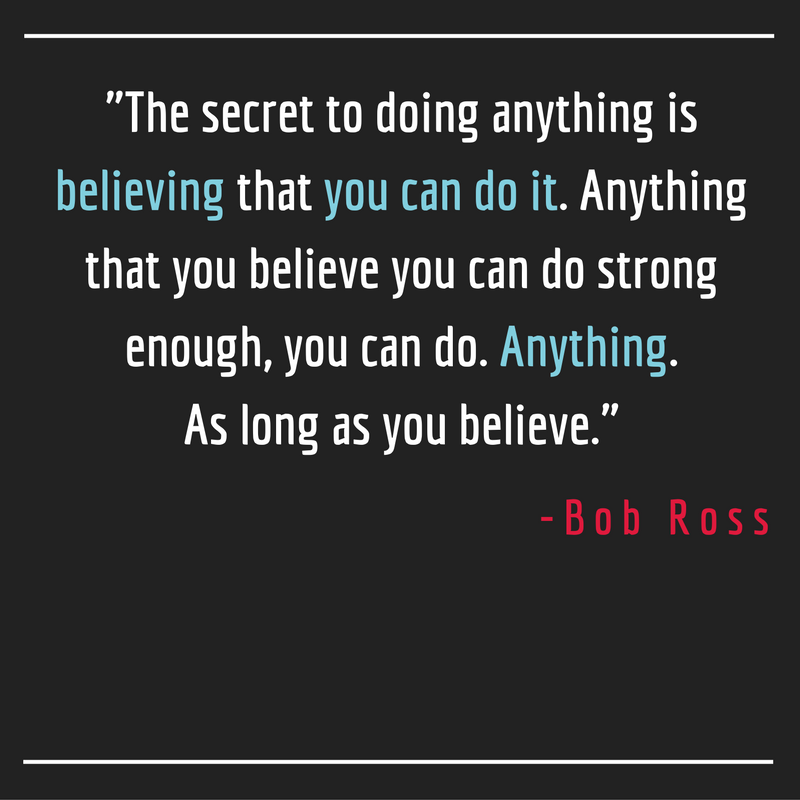 I remember watching Bob Ross paint his happy trees and powerful mountains and just being in awe of his calmness and lack of fear of “happy little accidents”. When I painted “accidents” usually involved large splotches of the wrong color paint. They didn’t qualify as “happy” or “little”. Bob Ross just made it seem so easy as he pulled palm tree branches out of a single line of black paint.
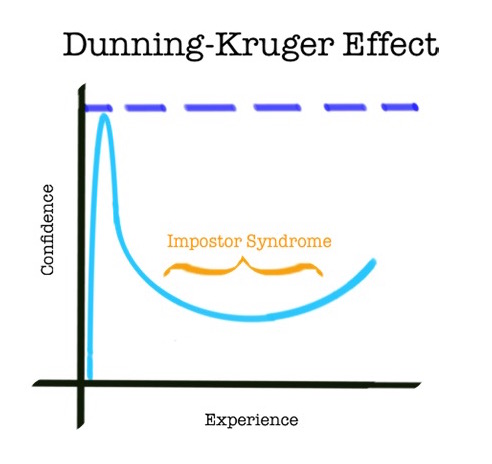 As we learn, we’re a bad judge of our own skill. It starts with the “I can paint that!” bravado of someone who’s never painted, an over-estimation of abilities that is part of the
 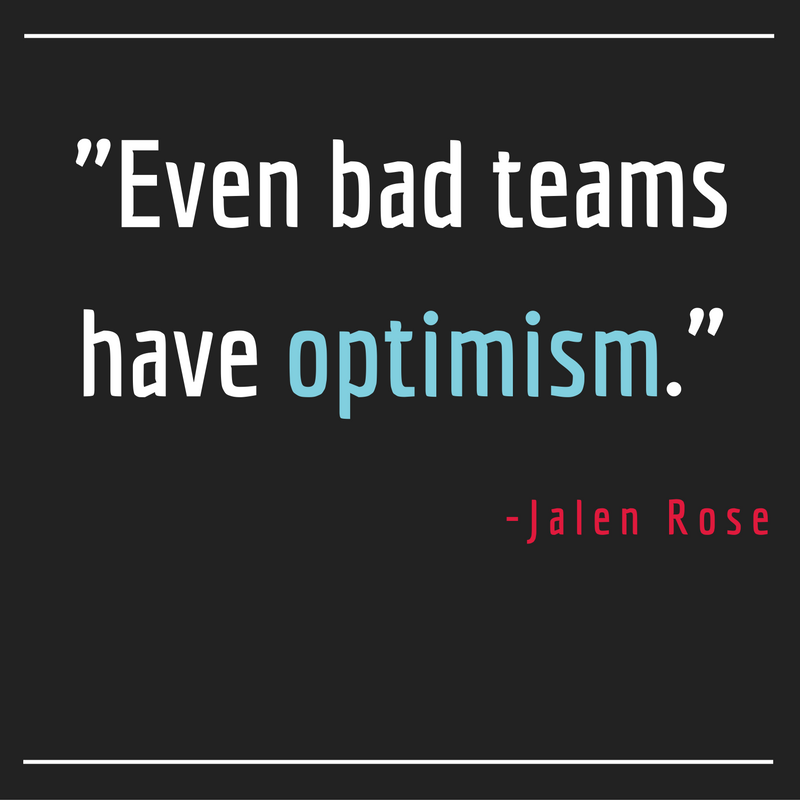 In Episode 20 of Gimlet Media’s podcast, StartUp, Lisa Chow investigates what happens when a lean, “let’s all try to do new things” startup shifts into the established, “wait we have an HR department now?” organization. It’s a brilliant take on the need for process and the translation of vision from one strategy to the next.
  Setting a goal is playing a game where you are constantly in failure, until you’ve succeeded. If my goal was to get a promotion, everyday that I don’t have my promotion is a day that I haven’t hit my goal. And even when I do, what then? I’ve reached a waypoint but I don’t have any other direction.
 Imagine you and your brother are flipping a coin to see who gets the last dinner roll. Picking heads, you’ve predetermined that one side of the coin is success, while the other is embarrassing failure. As it floats in the sky, moving slowly through its parabolic arch, you salivate thinking about the melted butter on that last roll. And in this moment, the coin becomes kind of like Schrödinger’s cat’s coin, existing in a state of heads and tails at the same time. Both success and failure.
 This is just like the prototype that we want to test with our early adopters. Every prototype (no matter how ugly, how duct-taped together, or how functionality barren) has a chance of success. You’re setting your success metrics early and you know if you epically fail, at least you’re failing forward and learning. You let your prototypes live on the edge of the coin, why not you?


 Go Forth And Be Awesome