A game is a series of interesting choices. – Sid Meier
A common game design framework is called MDA, or Mechanics – Dynamics – Aesthetics. Players experience it back to front; from feelings (Aesthetics) through how they interact with the game (Dynamics) due to the rules (Mechanics). Game designers, however, create the game by starting with the basic moves that build how the player interacts and leaves them with feelings.
It’s said that good mechanics are instinctual and invisible to the player. And yet they are still designed first. As an innovative leader, you are the game designer. So I’ve compiled 7 of the top mechanics you’ll need.
Process
Having structure and templates for innovation feels oxymoronic, but a well-defined process means people don’t have to waste mental muscle figuring out HOW to innovate. Constraints often spur on change and growth, similar to pressure on a tube of toothpaste. Your clearly communicated innovation process will have people pushing more ideas forward and allows others to jump on the idea because they’re all familiar with the process that it graduated from.
Metrics
As a business analyst, this one is true to my heart! You wouldn’t think that something as amorphous as “innovation” would have measurable KPI’s, but that makes them even more important in your culture. Some sample metrics would be “process efficiencies”, “prototypes developed”, and “hypotheses validated”. It is important to not lose sight that the key byproduct of innovation is knowledge gained.
Problem-sourcing
Many places picture their innovation process as a funnel, with disruptive products exiting out the narrow end of the funnel. Unfortunately, we can’t guarantee that. But what we can control is having enough raw material coming into the wide end of the funnel to work with. There are multiple channels for sourcing problems. Check your social media channels to see what your users are saying online. Set-up focus groups at regular intervals. Go to where your users are and experience it through their eyes. Open it up to internal communication channels. The more sources you can use, the clearer your understanding of the problems becomes.
Rituals
Don’t confuse rituals with routines. Rituals involve mindful participation towards the desired end state. Routines are practiced behaviors that you can tune out and still accomplish (like making that pot of coffee Monday morning without thinking about it.) Rituals are designed by the leader and are focused events. Maybe it’s a Friday meeting to share team victories from the week, or maybe it’s a weekly challenge using work skills on a non-work challenge. Whatever your rituals are, keep the end in mind.
Showcase
Knowledge doesn’t do well locked up. It needs to spread, grow, and spin-off into new questions and that means you need to connect brains together. Provide a forum and method for the sharing of all knowledge; from failed prototypes to focus group responses. These showcases must include the problem, the audience, the solution, the test plan, and (of course) the metrics. Not only do you need to create mechanics around the creation and sharing of showcases, but you also have to create the mechanic of others reviewing the showcases.
Reflection
As fun as it is to look 3, 5, 10 years ahead, it’s as important to look backward as well. Not through a lens of nostalgic status quo, but through a lens of “what could we do better?” Continuous improvement is needed with your processes, rituals, and all of your mechanics, just like it’s needed for your products. This will become more beneficial as the candor in your innovation culture grows stronger.
Absent-mindedness
Have you ever walked into a room and forgot why you walked in and only remembered once you started doing something else? Creative ideas can strike like that. Sometimes putting focused effort on solving a problem is like being stuck in the mud. You’re just spinning your wheels. What you need is to shift gears. Allowing some time for distracted focus or absent-mindedness gives the brain time to make unique connections. This can be accomplished through challenges or cross-departmental conversations to name a few. The important aspect is to give people time to think of other topics.
By now you’ve noticed that I haven’t given you step-by-step instructions on how to apply these mechanics to your organization. It’s up to you to tailor them to your team, your product, and your problems. You are the game designer. I’ve just given you some mechanics for you to now craft the dynamics and aesthetics around.
What interesting choices will you make?
Check out more of Go Forth and Be Awesome‘s Authentic Innovation series
Links
- What’s Wrong with Innovation
- Culture of Innovation
- Resources for Innovation [Coming Soon]
- Outcomes of Innovation[Coming Soon, but not as Soon]



 Every cloud has its silver lining. At least that’s what were told, usually when things go bad. There has to be a nugget of hope somewhere. I can only imagine that thought ran through Jerry Sternin’s mind when he visited Vietnam in 1990. As part of Save the Children, Sternin was there to help the malnourished.
 CAN you make coleslaw with a gasoline-powered lawnmower? Of course you CAN. But SHOULD you?
 If I am inventing a new way to make coleslaw, I’m not going to sell you a lawnmower… because it doesn’t mesh with your jobs to be done. The “coleslaw crowd” most likely wants something that shreds cabbage in a snap, requiring minimal storage space, and clean up should be a breeze. The mower ticks one of the boxes, but it fails on the other two. It also introduces new pain points, such as monitoring gas levels and the eventual spray-back of finely shredded cabbage on your kitchen walls.
 This is a place where mankind has sanitized, homogenized, and developed using a rigid and typically unforgiving material; concrete. A downfall of concrete’s hard-line take on the world is that sometimes cracks form. Cracks that let the organic spurt through. Dirt and rain make their way down, plants make their way up, and we’re left with this analogy. Creative ideas can grow in restrictive environments.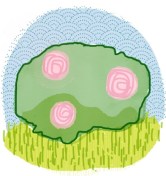
 rosebush growing into the neighbor’s yard. These restrictions come from your users (it needs to be mobile, it has to do [task] faster, etc). However if we don’t let solutions diverge from the root of the problem, we wont have a chance to converge them into the best bouquet of products possible.
 Way before the Walt Disney Resort drew tourists to Florida like moths to a flame, they needed to buy some land. Had they waltzed over to the East Coast and declared Disney domain over central Florida, imagine what land costs would have been like. No, Walt had a plan to avoid paying “Hollywood upcharges”.
 I can’t imagine a less appealing career than being a video game villain. No matter how hard you try, or how many henchmen you hire, the hero is destined to win the game. Castles broken. Airships grounded. Treasure looted. So what does the video game villain do next? They build a different castle, marginally tougher, but still pretty much using the same stuff. Insanity? Maybe. But definitely on the way to a breakthrough innovation.
 , and in the end you have a better version of what you do. Fits in your existing business model.
 For more than 150 years, the National Weather Service has been providing weather updates IN ALL CAPS. Even as weather forecast technology made great leaps and bounds, the National Weather Service was content in sticking with all caps. It’s due to the old limitations of how they communicated their reports. However on
  Go Forth And Be Awesome