“I’ve got so many MBAs, but what I need is a poet. Poets are the original systems thinkers.” -Max DePree
Poetry uses “condensed or compressed form to convey emotion or ideas to the reader’s or listener’s mind or ear” as defined by Poetry.org. Which felt like the perfect site to define poetry at. If we re-word it a little, we get “the shortest path that gives a desired feeling to the user”. Just extrapolate that “feeling” out to include usability a perception of value, and good poetry becomes good user interface and experience design.
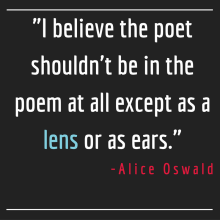
 Now, this is a new analogy to me, something that I am going to try on my next prototype. I am going to design the user interface and experience through the lens of poetry. I will link to my findings here (when they exist). However some key components of poetry feel ripe for picking when designing.
Imagery
Imagery in poetry actually relates to the five senses (not just relying on images). What are ways that a good user-centered design uses imagery? The friction felt when moving components around that gives it a real feeling. The audio cue when an action is triggered. Even the icons selected play a part in the overall imagery scheme.
Rhythm
Poetic rhythms range from the famous iambic pentameter to the unknown by name (but you totally know it when you hear it) anapestic tetrameter. Rhythm plays such a huge part that a lack of rhythm is used to create its own feeling. What kinds of rhythms do we create in our designs? Can we keep the user in a good flow state? Do we break the rhythms to call their attention to important pieces? I envision a UX rhythm being the user experiencing the entirety of the innovation, with each major beat striking true.
Word Association & Connotation
In an effort to be concise, poetry uses what the read brings along with them to add extra meaning to words. Each word chosen by the poet is specially selected to bring across a bouquet of feeling to the reader, without writing the bouquet in. This is the “show, don’t tell” writing advice. Clearly a UX can use an envelope to signify email, and a disk to represent saving, but what other rich connotations can we bring? One word of caution here: this requires some strong empathy and knowledge of your core user if you are going to rely on the baggage they bring to tell your story.
Enjambment
First of all, its just fun to try to say “enjambment”. Enjambment is breaking up a line in poem across two lines to create a sense of anticipation and intrigue.
“A thing of beauty is a joy forever:
Its loveliness increases; it will never
Pass into nothingness but still will keep
A bower quiet for us, and asleep
Full of sweet dreams, and health, and quiet breathing.”Endymion by John Keats
Notice that the three middle lines can’t even stand by themselves. The line break pauses the reader in extracting meaning from what they are reading. How can we use enjambment in great UX UI design? Where do we need to create pauses or breaks that are beneficial to the user? Can we leverage that anticipation into a positive feeling while using our product?
Repetition
This is used over and over and over to drive a point home. Poetry uses it to call out the important stuff or bring certain images back into view. A good design uses repetition to make sure the user is comfortable knowing when and how to take action. But when does repetition lead to boredom? Maybe this has some parallels to rhythm?
I don’t have the answers yet. But I’m willing to try to find them. Like I said, this is a new lens / analogy for me and one I’m eager to test out. If you test it out or already think of it this way, let me know! I’d love to start a conversation around Poetic UI UX Design.
 In an effort to broaden my t-shaped skills portfolio, I dug in and started learning AngularJS. Being able to mock things up quickly (and by myself) allows me to get prototypes into the hands of the core users faster, cheaper, and more closely aligned with the hypothesis I’m testing. So while I am certainly no master of the craft, I can do enough programming to get some ideas off the ground and feeling real (ok real-ish).


 ever begins, set the success metrics that will define your test and your prototype. It is beneficial to know the benchmark metrics that you are trying to surpass (if they are available) and how much difference you are trying to make. Use this data to plan for enough testers to be confident in your results. After the test, you will have a clear understanding of your outcome, and whether to pivot or persevere.


 Curves are the enemy of fast moving trains. Just ask Denzel Washington and Chris Pine in Unstoppable. Nearly 30 years before the movie, The British Rail Research Team unveiled the
  I’m in the middle lane of a three lane road, on the last leg of my school drop-off delivery. Just one of my kids left to go. A car in front of me has their right turn signal on. Flashing their intention to the world adjacent and slightly behind them. They kept going straight; no merging, no lane changing.
 In our everyday, there are hidden aspects of problems that we can’t really see. Thats why auto manufacturers added all those mirrors, cameras, and sensors. What do we do as innovators? We can’t walk through life with an array of mirrors strapped to us. No, this is when we use some lenses. Previously, we’ve talked on the surface level of lenses (
 Go Forth And Be Awesome